English
 Deutsch
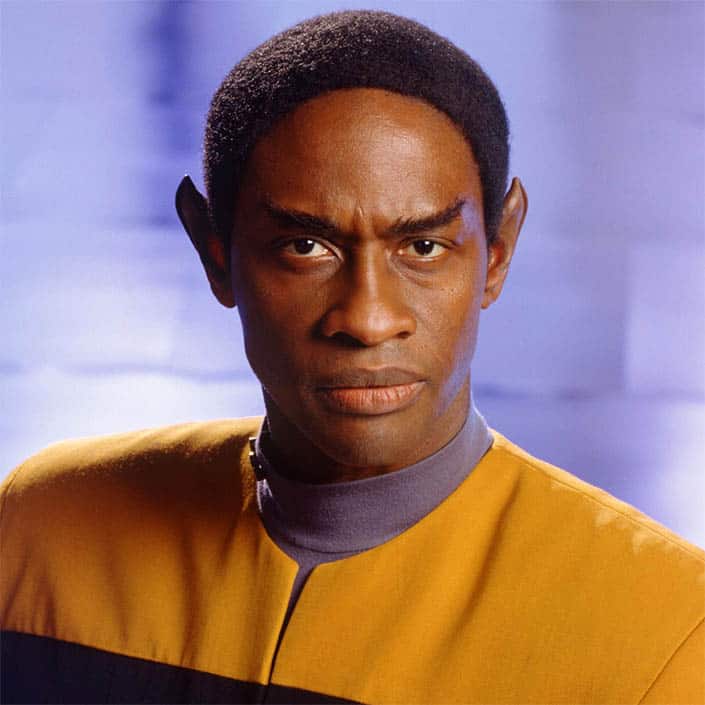
From Excelsior canon puzzles to fan-film leadership, Star Trek Online voice work, and real-world science outreach, Tim Russ’s Trek story is bigger—and less covered—than the usual biography.
Introduction and thesis
Tim Russ is, in the mainstream telling, Tuvok—the steadfast Vulcan security chief who anchored Star Trek: Voyager for seven seasons. That is true, but incomplete. What gets less ink are the interconnected chapters that complicate the familiar arc: how a single Voyager hour reframed a Star Trek film’s past; why his behind-the-camera turn stands out as more than a résumé line; the leadership role he took in ambitious, semi-professional fan productions navigating studio lines; the way his voice work extended Tuvok’s canon in games; and how he has parlayed Trek visibility into citizen science and astronomy outreach. This feature traces those under-reported facets, relying on documentary sources and published interviews—and it flags where fandom lore often outruns the citations.
Most search-engine results reduce Russ’s pre-Voyager Trek to a footnote, wave at “Living Witness,” and skip the transmedia and science chapters entirely. Taken together, these less visible threads show a performer and filmmaker who doesn’t simply occupy a legacy role; he steers it into new mediums and, occasionally, new disciplines.
[Fact-check box] Early Trek appearances pre-Voyager
What’s verifiable—and what gets conflated:
- Star Trek: The Next Generation (1993): Russ appears as Devor, one of Kelsey’s mercenaries, in “Starship Mine.”
- Star Trek: Deep Space Nine (1994): He appears as the Klingon T’Kar in “Invasive Procedures.”
- Star Trek Generations (1994): He portrays an unnamed Starfleet lieutenant on the bridge of the Enterprise‑B.
- Not Star Trek VI: The Undiscovered Country: Russ does not appear in the 1991 film, despite frequent fan conflation.
- Why the confusion persists: Voyager’s “Flashback” placed Tuvok aboard the Excelsior during the Star Trek VI timeline, and Russ’s Enterprise‑B bridge role in Generations is often miscaptioned online as an Excelsior appearance. See endnotes for sources.
Canon or retcon? Tuvok and the Excelsior era
One of the most persistent points of confusion about Tim Russ’s Star Trek résumé is the idea that he appeared, as Tuvok, in Star Trek VI: The Undiscovered Country. He didn’t. The confusion is understandable: Voyager’s season‑three episode “Flashback” (1996) retroactively embeds the character Tuvok aboard Captain Sulu’s Excelsior during the Praxis crisis that frames the opening of Star Trek VI. The episode accomplishes this by recreating and intercutting scenes from the 1991 film with new material shot on exquisitely rebuilt Excelsior sets. Canonically, Tuvok is there. In the film credits, Tim Russ is not.
The convergence of three facts keeps the conflation alive. First, “Flashback” is a classic Star Trek retcon in the best sense—using character backstory to deepen franchise continuity—so fan shorthand often collapses “Tuvok on Excelsior” into “Tuvok in ST VI.” Second, the timing is tight: Russ, already familiar to Trek casting offices from guest roles, made a visible bridge appearance as a Starfleet lieutenant in Star Trek Generations just three years after The Undiscovered Country. Still images of that Generations role circulate widely and are frequently mislabeled as Excelsior shots. Third, conventions and retrospectives often frame “Flashback” as Russ “returning to the Excelsior era,” which, while narratively apt, blurs the onscreen facts.
When Russ has addressed the topic publicly, he has tended to separate the actor’s filmography from the character’s canon. He has acknowledged, in interviews, the neatness of Tuvok’s Excelsior service tying Voyager to the Original Series movies—while also clarifying that his pre‑Voyager film work is the Enterprise‑B in Generations, not The Undiscovered Country. In short: canon places Tuvok on the Excelsior during Star Trek VI events; the actor Tim Russ appears in Generations. Confusing? Yes. It’s also a case study in how Star Trek’s layered transmedia storytelling can eclipse the granular credits that fuel accurate filmography.
Behind the camera: what stands out about directing “Living Witness”
Many actor biographies list “directed the Voyager episode ‘Living Witness’” and stop there. That misses why the choice and the execution mattered. “Living Witness” (1998) is a meta‑historical parable set 700 years after Voyager’s passage through an alien sector. An archival backup of the Doctor is reactivated in a museum that enshrines a demonized, revisionist hologram of “the warship Voyager.” The episode then oscillates between the Kyrians’ propagandistic reconstruction—complete with leather‑clad, glowering doubles of the crew—and the Doctor’s attempt to correct the record and, in doing so, avert fresh violence in the present.
As a directorial debut, it’s a slyly ambitious choice. Russ had to choreograph two tonal registers: the lurid, heightened “historical” reenactments and the measured, conciliatory present‑day thread in which the Doctor negotiates with curators and community leaders. It required precise control of performance so that the actors’ “wicked doubles” were credible as biased projections—not camp. The production also leaned into design language to differentiate timelines: harsher lighting, angular sets, and militarized costumes for the museum dramatizations versus the more familiar Voyager visual grammar for the Doctor’s testimony. Reviews at the time and in retrospective rankings often single out “Living Witness” as one of Voyager’s smartest late‑run hours precisely because it interrogates how histories are made, unmade, and weaponized.
Documented anecdotes from the production underline the craftsmanship. The team rebuilt key standing sets to support the alt‑timeline look (the “warship” bridge, for example, with more aggressive lines and darker palettes) and staged parallel blocking so that viewers would recognize the base scene while sensing its distortion. Russ has spoken about the logistical demands of directing colleagues in heavy makeup and prosthetics—selling an entire society’s museum culture while giving Kate Mulgrew, Robert Picardo, and others latitude to play against type. He did not direct additional episodes of canonical Star Trek television; the singular assignment, and the episode’s enduring reputation, may be one reason coverage freezes at the title, as if the mere fact of a “first” outweighs the specifics of how and why it works. It’s the specifics that reveal the instinct: Russ used his debut to interrogate narrative authority—the very thing that propels fan debates about what “really happened” in Trek’s timeline.
Fan‑film laboratories: Of Gods and Men and Renegades
If “Living Witness” shows Russ thinking about how stories are framed, his work in fan productions shows him framing them under new constraints. Star Trek: Of Gods and Men (2007–08) was a multi‑part, independently produced miniseries directed by Russ that gathered a critical mass of Trek alumni—Nichelle Nichols, Walter Koenig, Grace Lee Whitney, and others—around an alternate‑timeline premise: what if James Kirk had never existed? Shot on the then‑New Voyages/Phase II sets, Of Gods and Men was a high‑water mark in pre‑guidelines fan collaborations, threading the needle between homage and original spin. Russ’s leadership balanced reverence for legacy characters with an edgier, darker palette than most televised Trek of the era would allow.
Star Trek: Renegades (2015) sharpened that experiment into a pseudo‑pilot: a proof of concept intended to pitch a grittier, covert‑ops series to contemporary Trek gatekeepers. Russ directed and, initially, reprised Tuvok, with Walter Koenig appearing as Admiral Chekov. The production incorporated new characters, a clandestine mission structure, and a look closer to post‑Battlestar genre TV than to the brightly lit optimism of 1990s Trek. Whatever one’s aesthetic verdict, Renegades mattered as a test case in transmedia pressure: how far could alumni‑led, donor‑supported projects push Star Trek’s stylistic and tonal boundaries?
The answer changed in 2016, when CBS and Paramount issued formal fan‑film guidelines following high‑profile legal friction elsewhere in the fan‑production space. Renegades adapted by removing Star Trek IP—renaming species and characters, scrubbing insignias—and continuing as Renegades: The Series without direct linkage to the Trek canon. Russ remained a creative leader through that pivot. The result is a rare, documented instance of an alumni‑driven project changing its DNA midstream to comply with studio policies yet preserve a creative team’s momentum. For anyone mapping Star Trek’s broader transmedia ecosystem—the interplay of studio canon, licensed extensions, and fan‑made works—Russ’s fan‑film chapters function as living case studies in legal constraints shaping story and design.
From the bridge to the booth: Tim Russ in Star Trek Online
One domain where Russ’s Tuvok continued to evolve in plain sight—but out of reach of many general‑audience bios—is Star Trek Online (STO), Cryptic Studios’ long‑running MMO. Beginning with the 2014 featured episode “A Step Between Stars,” which set up the later Delta Rising expansion, Russ returned to voice Admiral Tuvok in an arc that moved with Trek’s broader transmedia timeline. The storylines brought Voyager‑era characters back into play amid the Solanae Dyson Sphere mystery and Voth conflict, using Tuvok as a steadying presence in the player’s command network.
Delta Rising extended that voice‑led canon by reuniting multiple Voyager alumni (including Jeri Ryan, Robert Picardo, and Garrett Wang) and placing Tuvok at the center of exploratory and tactical decisions in the Delta Quadrant. The writing leaned into the character’s measured logic and deeply ethical frame, using him to moderate crises—from Undine/Species 8472 diplomacy to Vaadwaur hostilities—where STO could give players arcs too expansive for television runtimes. Russ’s performance kept continuity with Tuvok’s on‑screen arc while allowing new shades—weariness, guarded optimism—to show through. He would reprise voice work in subsequent STO story content as the game’s timeline marched forward.
Why does this matter beyond completism? Because Trek’s 21st‑century storytelling increasingly spills beyond linear TV and film. Voice performances in licensed games like STO aren’t side quests; they are canon‑adjacent threads recognized by official channels and often referenced by fans and even later series. Profiles of Russ that omit this chapter understate his role in stewarding Tuvok through the franchise’s post‑television growth.
Telescope to tricorder: science outreach and NASA ties
While many Trek actors have engaged in STEM advocacy, Russ’s astronomy bona fides are unusually hands‑on. An active amateur astronomer and astrophotography enthusiast, he has leveraged his platform to support citizen‑science campaigns that directly feed NASA mission planning. Notably, he has participated in stellar occultation observations for NASA’s Lucy mission—the ongoing expedition to the Trojan asteroids orbiting near Jupiter. In occultations, astronomers watch a distant star “wink out” as an asteroid passes in front of it; the resulting light curve allows researchers to refine the target’s size, shape, and even detect rings or satellites.
Russ joined Lucy’s network of volunteer observers during key campaigns aimed at pinning down trajectories of targets such as Polymele and other Trojans. In one widely covered instance, a coordinated effort captured an occultation that revealed a previously unknown companion object associated with a Lucy target. NASA communications and space‑news outlets highlighted Russ’s contribution as one data point among many—a reminder that with the right equipment, training, and discipline, amateurs can materially help fly‑by missions hit their marks. The work is meticulous: selecting observing sites along predicted “paths of shadow,” calibrating timing equipment, and submitting data into the mission pipeline.
In parallel, Russ has delivered astronomy talks at clubs and observatories, including outreach programs and star parties where he blends basic observing technique with pop‑culture on‑ramps. The draw is real: fans who first learned his name through Voyager stick around to learn about light pollution, telescope selection, and the dynamics of small‑body exploration. Crucially, he frames Trek’s speculative science as a gateway to the methods and patience of real observation. That through‑line—from a fictional tactical officer who trusts data to a real‑world volunteer who collects it—feels less like branding and more like continuity of values.
The casting stories we don’t hear
Casting lore circulates in every fandom, and Star Trek’s is particularly rich: lists of who auditioned for what, near‑misses, roles lost and roles reclaimed. Russ’s name surfaces regularly in these oral histories. What’s documented? In interviews, he has said he auditioned for The Next Generation early on, including for Geordi La Forge, and read for roles during Deep Space Nine’s run—part of a long courtship with the franchise that preceded Voyager. He subsequently landed two pre‑Voyager guest roles (TNG’s “Starship Mine” and DS9’s “Invasive Procedures”) before being cast as Tuvok.
What’s not well documented is anything more specific: screen tests preserved online, official shortlists, or contemporaneous casting memos tying him to a particular pre‑Voyager lead. The tendency to back‑project inevitability onto franchise careers—“he was always meant to be a Vulcan”—is narratively satisfying, but it’s not how casting works. The responsible way to treat the lore is to keep it anchored to on‑the‑record remarks by Russ and by casting staff and to avoid inflating “I auditioned for the show” into “I almost got X role” unless the people making those decisions say so. That still leaves a meaningful takeaway: persistence across multiple series and media put Russ on the right desks when Voyager needed a Vulcan whose calm felt lived‑in.
Conventions, leadership, and representation
Russ’s presence on the convention circuit is two‑pronged: he is both a cast member who can trade stories from the bridge and a creative who can speak to directing, fan‑film production, and game voice work. That dual authority shows up on panels where technical craft and story intent are in the foreground, and in smaller Q&A sessions where he often turns questions about Tuvok’s stoicism into conversations about performance choices and Vulcan interiority.
On representation, Russ remains one of Star Trek’s most visible Black Vulcans. That matters. Across half a century, Vulcan characters have been coded primarily through cultural traits (logic, discipline, ritual) rather than racialized human signifiers. Tuvok’s run on Voyager—prominent, philosophically serious, and rarely hemmed in by Earth‑bound stereotypes—helped normalize a Starfleet where a Black actor could embody that archetype without the story pausing to explain it. Official channels have not always foregrounded that representational milestone, focusing instead on species and duty roles, but in fan spaces the point registers. Younger fans—especially Black fans who latched onto Voyager in syndication or streaming—often articulate Tuvok’s importance as both competence fantasy and serenity model.
Russ does more than appear. In alumni ensembles, he has frequently taken on moderating and organizing roles, steering conversations toward craft and ethical themes rather than gossip. That leadership extends to the fan‑film sets he ran and to science‑outreach events where he is the marquee name but works to decenter celebrity in favor of content. The influence is subtle; it’s a tone. The communities he helps convene end up less about access to a star and more about participation in a culture of inquiry—of which Trek is a part.
Conclusion
Follow the threads and a fuller picture of Tim Russ’s Star Trek career emerges: not just the man who gave Tuvok his steady pulse, but an artist who thought carefully about who writes history and who corrects it; a leader who built parallel platforms when studio pipelines ran cold or slow; a voice who kept canon alive in a game world that matters to today’s franchise; and a citizen scientist who translates screen credibility into real‑world data.
The Excelsior canon puzzle is emblematic: a character backfilled into a film’s timeline, an actor misremembered into a movie he didn’t do, a fandom reconciled by care for the record. “Living Witness” dramatizes the same stakes about how narratives congeal; Russ’s fan‑film chapters show how legal frameworks reroute creative ambition without extinguishing it; his STO work proves that what an actor does with a role after the final network credits can be consequential; his astronomy outreach shows that being “of Star Trek” can mean building bridges from fiction to science. Tell the full story, and Tuvok stays central—but not solitary.
Timeline sidebar
- 1995–2001: Star Trek: Voyager era; Tim Russ portrays Tuvok across seven seasons.
- 1998: Directs Voyager episode “Living Witness.”
- 2007–2008: Directs Star Trek: Of Gods and Men (three‑part fan miniseries).
- 2014: Voices Admiral Tuvok in Star Trek Online’s “A Step Between Stars”; later anchors Delta Rising expansion.
- 2015: Directs Star Trek: Renegades pilot; later shepherds the non‑Trek Renegades series after guideline changes.
- 2023–2024: Returns as Tuvok in Star Trek: Picard season 3; reprises voice in Star Trek: Prodigy’s Netflix‑debuted season 2 era.
- 2020s: Astronomy outreach and Lucy mission occultation campaigns garner coverage of Russ’s citizen‑science work.